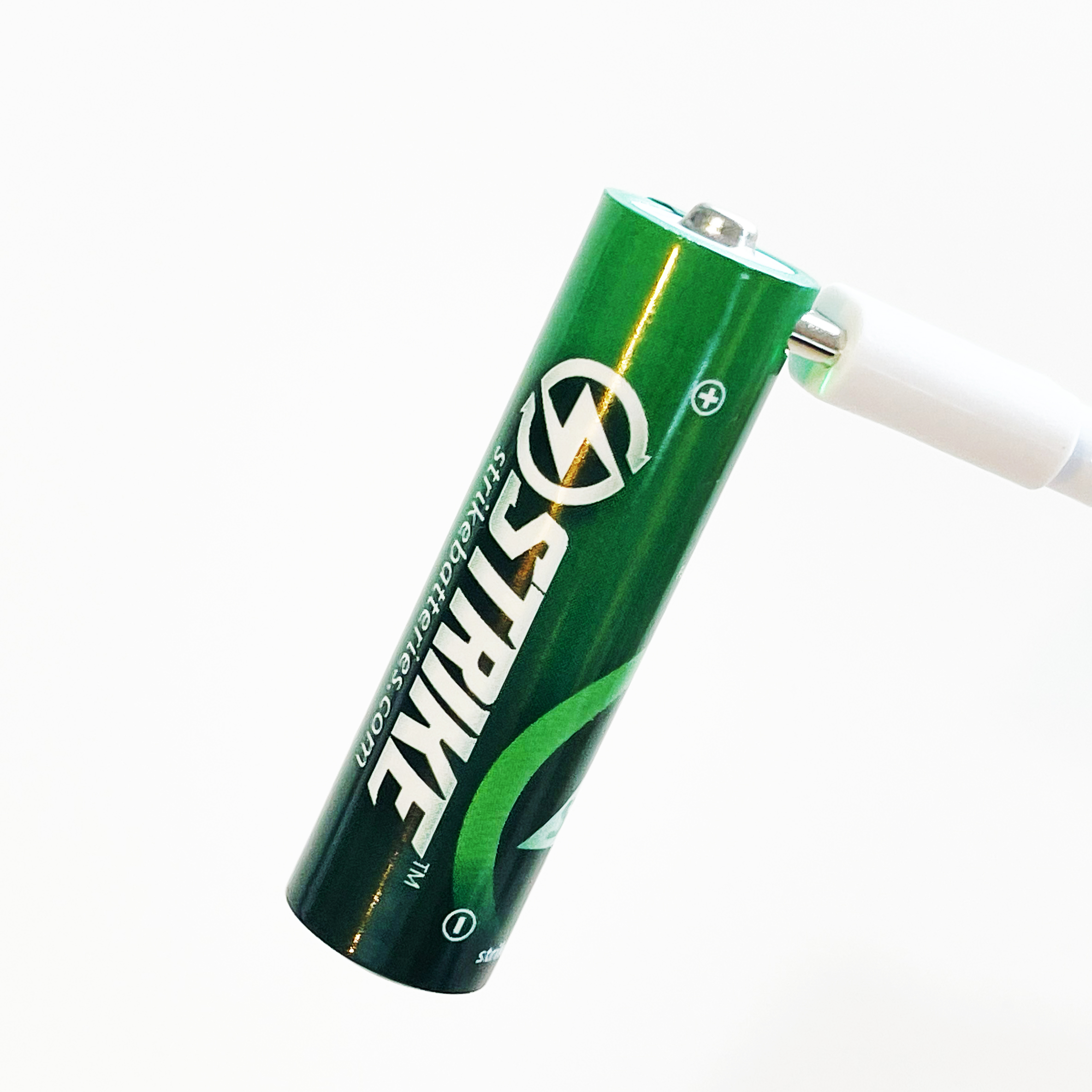
Safety you can check, not just a promise. Strike Batteries USB-C rechargeable lithium-ion batteries (18650, CR123A, CR2, 14500, AA, AAA, C, D and 9V) have a built-in protection circuit and are tested to internationally recognised battery safety standards. This page collects the laboratory test reports and compliance certificates, plus a video of the protection circuit working.
- Built-in protection circuit that puts the battery to sleep on short circuit, excess current, excess voltage or abnormal temperature.
- UN38.3 and IEC 62133-2 reports for transport and cell safety.
- 13 documents covering shipping, electrical safety, EMC, restricted substances and durability.
Watch the Battery Protection Circuit Test
In this video we put a Strike Batteries cell through the faults that cause unprotected lithium-ion batteries to fail.
The video shows the protection circuit responding to:
- a direct short circuit on an 18650 battery
- a direct short circuit on an AA battery
Each battery contains a protection circuit that monitors the cell and puts it to sleep when it detects a fault. Protection circuits reduce risk but do not replace correct use: only use the battery in devices designed for its voltage, and follow the instructions supplied.
Lithium Battery Safety Certificates and Test Reports
Each report below applies to the Strike Batteries USB-C rechargeable range and shows the model, test date and standard on the document itself. Need the full PDF for a report? Contact us and we will send it.
Battery cell and transport safety
How the cells are tested for safe use, and how the batteries are classified for shipping by air, sea and road.

UN 38.3 Transport Test Report
Required to ship lithium-ion batteries. Covers altitude simulation, thermal, vibration, shock, external short circuit, impact/crush, overcharge and forced discharge tests.

IEC 62133-2 Safety Report
International safety standard for portable sealed lithium cells and batteries. Tests include external short circuit, overcharge, forced discharge, thermal abuse, crush and free-fall drop.

Air Shipment Classification Report
Documents the transport classification of the batteries for air freight under the IATA Dangerous Goods Regulations.

Sea Shipment Classification Report
Documents the transport classification of the batteries for ocean freight under the IMDG Code.

MSDS / SDS Safety Data Sheet
Composition, safe handling, storage, first aid, fire-fighting and disposal guidance in the standard safety data sheet format.
Electrical safety and compliance
Safety and regulatory documents for the electronics built into each USB-C rechargeable battery.

IEC 62368-1 Equipment Safety Report
Hazard-based safety standard for electronic equipment, covering electric shock, fire and energy-source hazards, including the USB-C charging electronics.

EMC Test Report
Electromagnetic compatibility testing: confirms the battery does not cause harmful interference and works properly around other electronics. Test Standards: EN 55032:2015+A11:2020, EN 55035:2017+A11:2020

FCC Compliance Report
United States FCC compliance for electromagnetic emissions from electronic devices.

CE Conformity Report
Documentation supporting CE marking for sale in the European Economic Area, showing compliance with applicable EU health, safety and environmental requirements.
Materials and substances
Reports showing what the batteries and their plastic parts are made without.

RoHS Test Report
Confirms limits on restricted substances including lead, mercury, cadmium, hexavalent chromium, certain flame retardants and phthalates.

PAHs Test Report
Tests plastic and rubber parts for polycyclic aromatic hydrocarbons, which are restricted in EU consumer products under REACH.
Drop and packaging durability
Physical tests that simulate real-life handling and shipping.

1.2 m Drop Test Report
Free-fall drop test from 1.2 m, simulating accidental drops in everyday use.

Stacking Test Report
Stack-load test simulating warehouse storage and shipping conditions, so batteries arrive in good condition.
Frequently Asked Questions About Battery Safety Testing
Are Strike Batteries USB-C rechargeable batteries safe?
Each battery has a built-in protection circuit and is supported by the test reports on this page. No battery is risk-free, so use compatible devices and follow the instructions supplied.
What is UN38.3 and why does it matter?
UN38.3 is the United Nations transport test for lithium batteries. A battery must pass it before it can be shipped by air, sea or road.
What is IEC 62133-2?
IEC 62133-2 is the international safety standard for portable sealed rechargeable lithium cells and batteries. It tests for faults such as short circuit, overcharge and forced discharge.
Are the batteries RoHS compliant?
Yes. The RoHS and PAHs reports above cover restricted substances in the batteries and their plastic parts.
Shop Certified USB-C Rechargeable Batteries
USB-C 18650 batteriesUSB-C CR123A batteriesUSB-C CR2 batteriesUSB-C 14500 batteries
Last updated October 2026. Certificates apply to the models and dates shown on each document.